
![[VIP] Unlimited Pass 2026.03.27](https://i.pinimg.com/1200x/d2/f8/2e/d2f82e903b9ca33b0f13704cc85a3d8a.jpg)


![[LS] ls.graphics Pass 2026.02.16](https://i.pinimg.com/1200x/8d/ca/7f/8dca7ff72d8b698f955649340d0ff398.jpg)

![[PRO] Craftwork Pass 2025.06.11](https://i.pinimg.com/1200x/98/d2/f0/98d2f0169226b431f4727441ecc6aa06.jpg)


![[VIP] Creovo: Creative Portfolio](https://i.pinimg.com/1200x/92/5d/39/925d39b614ae4e39adda25b73837f82b.jpg)


![[VIP] Voltz: Electric Car Website Template](https://i.pinimg.com/1200x/03/ba/41/03ba41513483727fcd26b95349750783.jpg)
![[VIP] Zyra: Coded Chat AI Dashboard](https://i.pinimg.com/1200x/ce/7b/92/ce7b926f22423fc046659dfe1dd7a604.jpg)
![[$] AlignUI: Code Library](https://i.pinimg.com/1200x/8d/91/1c/8d911c0a22483842cff69c130e80c37b.jpg)
![[VIP] The Grid Deck Template](https://i.pinimg.com/1200x/f2/df/6d/f2df6d865d31ed4400ddd74137a5a79e.jpg)

![[VIP] Solaris: Sales Forecast & Pipeline Review Deck](https://i.pinimg.com/1200x/ba/7c/48/ba7c485ac40a51054cf9074aead204e2.jpg)
![[VIP] Brand Guideline Presentation](https://i.pinimg.com/1200x/64/87/a7/6487a7c4da21072150a1664f83a6a234.jpg)


![[VIP] 44 Device Mockups: Metal Scene Pack](https://i.pinimg.com/1200x/96/0c/c4/960cc4d39f6f9f08c4ba4a40ae740a65.jpg)
![[LS] iPhone 17 Mockup](https://i.pinimg.com/1200x/18/42/c1/1842c11e3da971765bdcfbc5315f3df8.jpg)
![[LS] iPhone 17 Pro Max Mockups](https://i.pinimg.com/1200x/f0/2a/72/f02a724ed9f52ac4a1c66b5614809111.jpg)
![[LS] AE-Mockups, Apple Devices](https://i.pinimg.com/1200x/03/04/9b/03049ba79acaa546ae6389639f89bcc1.jpg)


![[VIP] Volnitsa: BLNDR MINI (2025)](https://i.pinimg.com/1200x/c3/f7/0a/c3f70ae1126be5c0af1977e58b56ba7a.jpg)

![[VIP] React Three Fiber: The Ultimate Guide to 3D Web Development](https://i.pinimg.com/1200x/78/02/1f/78021ffdfc8113cc8caba5b2c563ead4.jpg)
![[VIP] Ryan Hayward: Ultimate Framer Masterclass 3.0](https://i.pinimg.com/1200x/48/d6/3f/48d63f9723d7c49e6c34c182557c7431.jpg)


![[VIP] Whoooa! 156 vector Lottie animations](https://design.rip/uploads/cover/blog/whoooa-156-vector-animations.webp)


![[VIP] Staff Product Designer (ENG, RUS)](https://i.pinimg.com/1200x/0c/52/a0/0c52a08d8b0a25329806437933cf538f.jpg)


Why Are Designers Leaving Figma?
The Great Transition. The Creative Industry Is Changing Rapidly & So Is Figma’s Future.

Recently a collective trend has brewed up. Figma is losing its territory and monopolistic foothold on the creative industry. A majority of users that put Figma in the limelight are UI designers and developers who want to create pretty screens and strong products. While Figma is still good for all that, what it's great at, is losing value.

Figma Draw
Designers are slowly shifting to a building first mindset. Which means that a good chunk of UI designers are moving quickly to AI coding platforms to bring their ideas to life. The "Vibe Coding" trends wasn't just another tech bubble, but a wake up call for designers to create life like prototypes and MVPs from day zero. In fact, PMs and designers at Meta have publicly stated how they are showing working products instead of UI prototypes.
Vibe coding our own MVP makes handing off our work to developers — easy as pie.
While Figma is great with basic animated prototypes, there is something about creating an interactive app/website with a single detailed prompt that seems very magical. It also gives creatives the ability to show a working product to their teams, stakeholders, and developers. It's almost like we've traveled back in time, with designers becoming good at developing a real working product (front-end designers were very popular 10+ years ago).
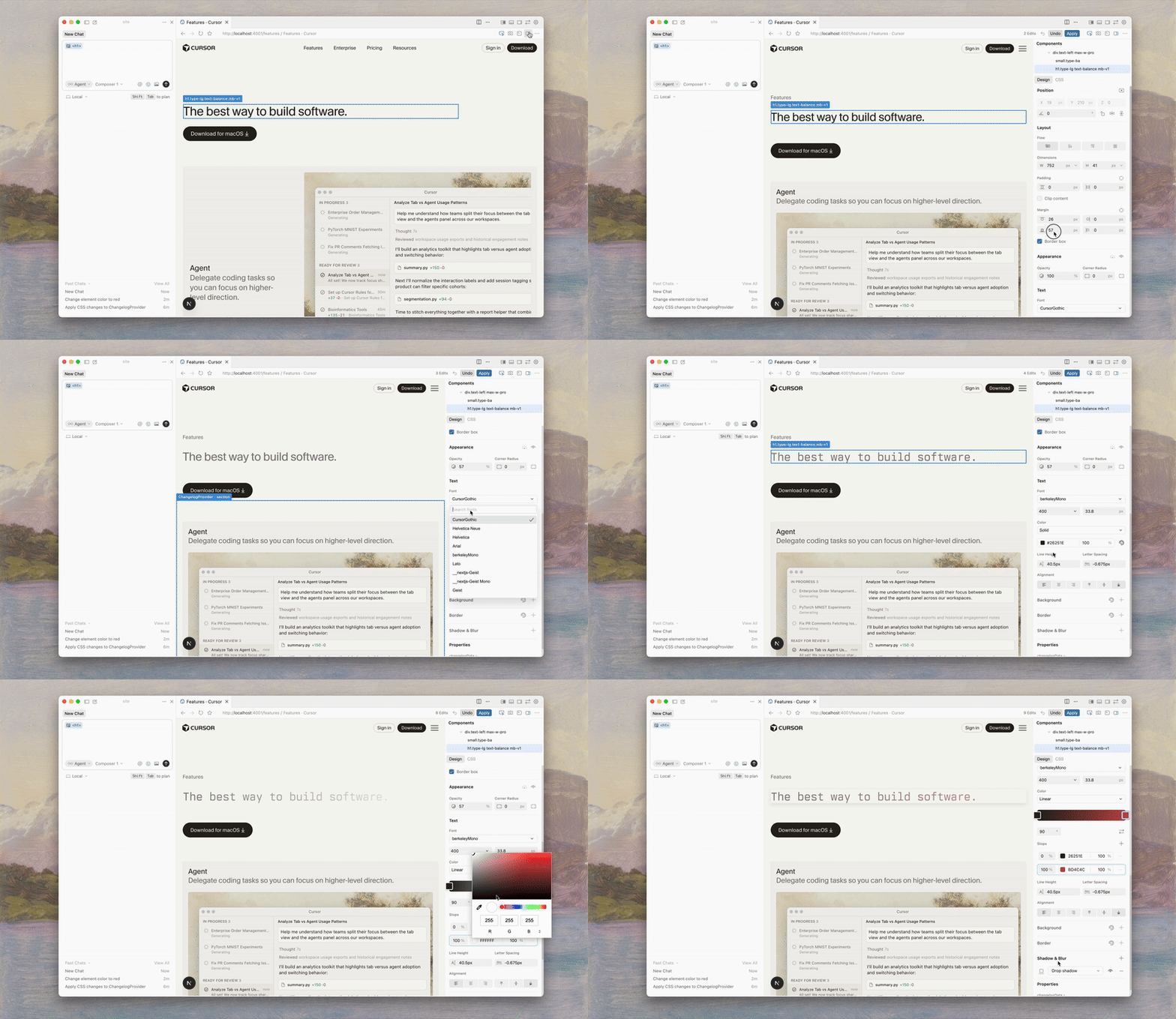
Cursor Visual Editor
Vibe coding our own MVP makes handing off our work to developers — easy as pie. Instead of the constant back-and-forth and sharing exportable elements to developers via tools like Zeplin, it is much better to hand over a coded & tested out basic app for the developer to continue off from. It reminds me of a relay race — handing off the baton to the next person to cross the finish line. On the other hand, some tools produce redundant and bloated code, which might hinder the shift.
Looking at it from a UX testing & research perspective, UI prototypes always have one major flaw. Building even basic flows for users to test was extremely time consuming. Not only that, users also had a half baked super-simplified version of an actual product to work with. This made these half baked prototypes less valuable to researchers and testers.
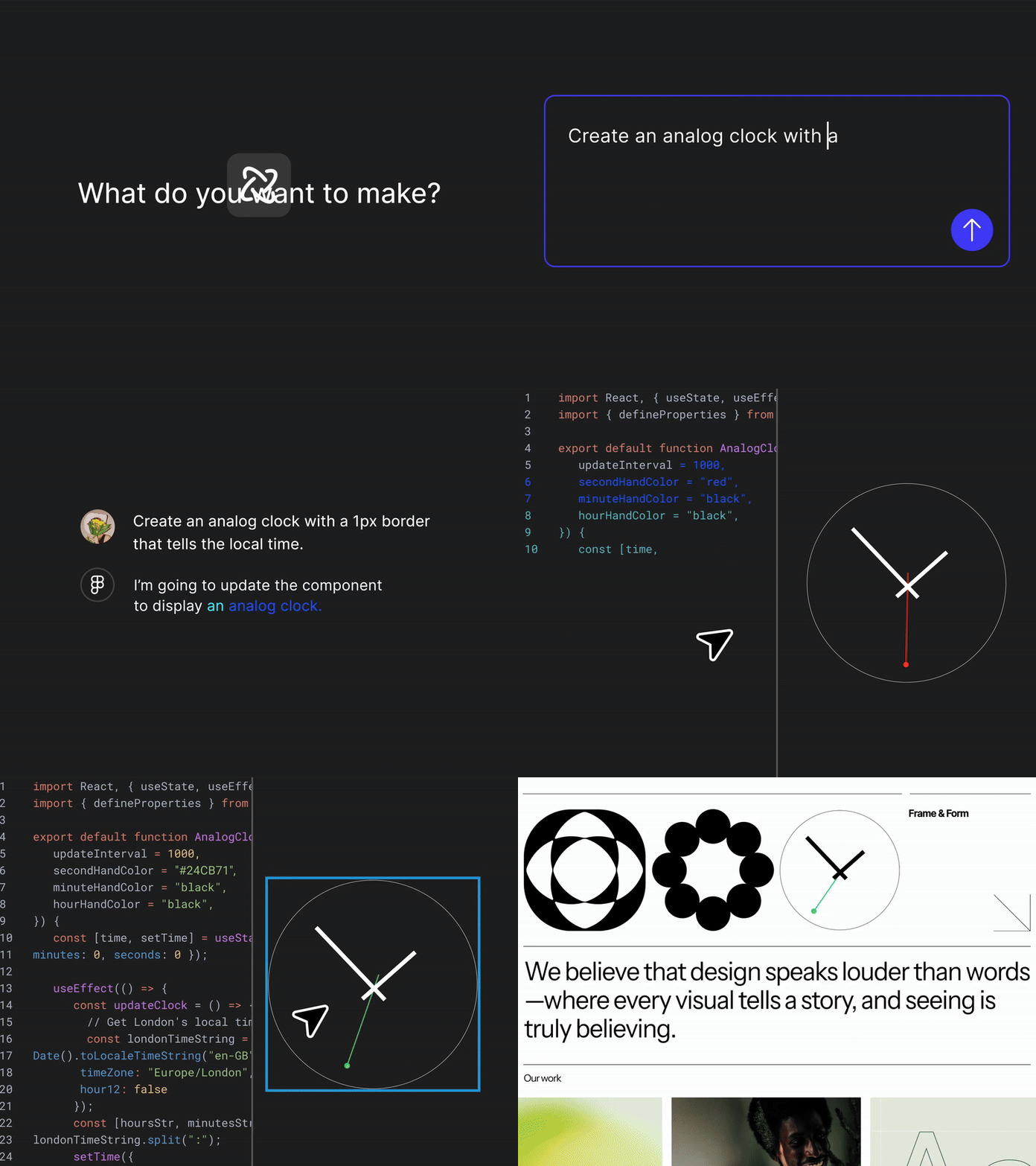
Figma Make — Their Vibe Coding Tool
Why on earth is Figma not doing anything about this? Why does the Figma dream not seem as bright anymore? Well truth is, the company is trying. They recently made their vibe coding tool made available to everyone (even people on their starter plans). Figma Make seems like an ideal tool — go from UI designs in Figma to real coded web-apps without having to switch apps or download anything new.
However, this whole Figma Make "plan" has some major loopholes.
- They missed the first mover advantage. Some of the first players like Cursor and Lovable have had the biggest jumps in user bases and funding thanks to the hype. Apart from that, Figma Make is still in its earlier stages, only boasting a few major features that cater to their current users.
- Other tools are promoting building first. Figma on the other hand is still design first. Since being a "builder" is more sought after, people levitate to AI coding tools which also have design tools in-built. Cursor and other tools now have a complete free canvas with Figma-like design features to quickly change properties without having to prompt all the time.
- Some companies are built different with a completely separate infrastructure. For Figma to change their infrastructure from the bottom-up will be very difficult. Let's not forget they are a publicly traded company. Risking major changes, can mean risking billions in stakeholder investments. Companies like Cursor on the other hand are built to be building first/coding first products, hence a major advantage.
This wave wouldn't have made such a splash if big corporations didn't start using the build-first approach in their workflows.
Dive Club recently covered AI workflows of designers from top companies here.
Recently companies like Atlassian, Cursor, Google & Meta have all publicly shared that they encourage design and dev teams to use vibe-coding for rapid prototyping purposes. In fact, Atlassian also colaborated with a popular creator to showcase their vibe-coding and AI prototyping workflow with the public here. This instantly changes the environment, with smaller companies scrambling to follow suite and see what type of results AI prototyping and vibe coding can get them.
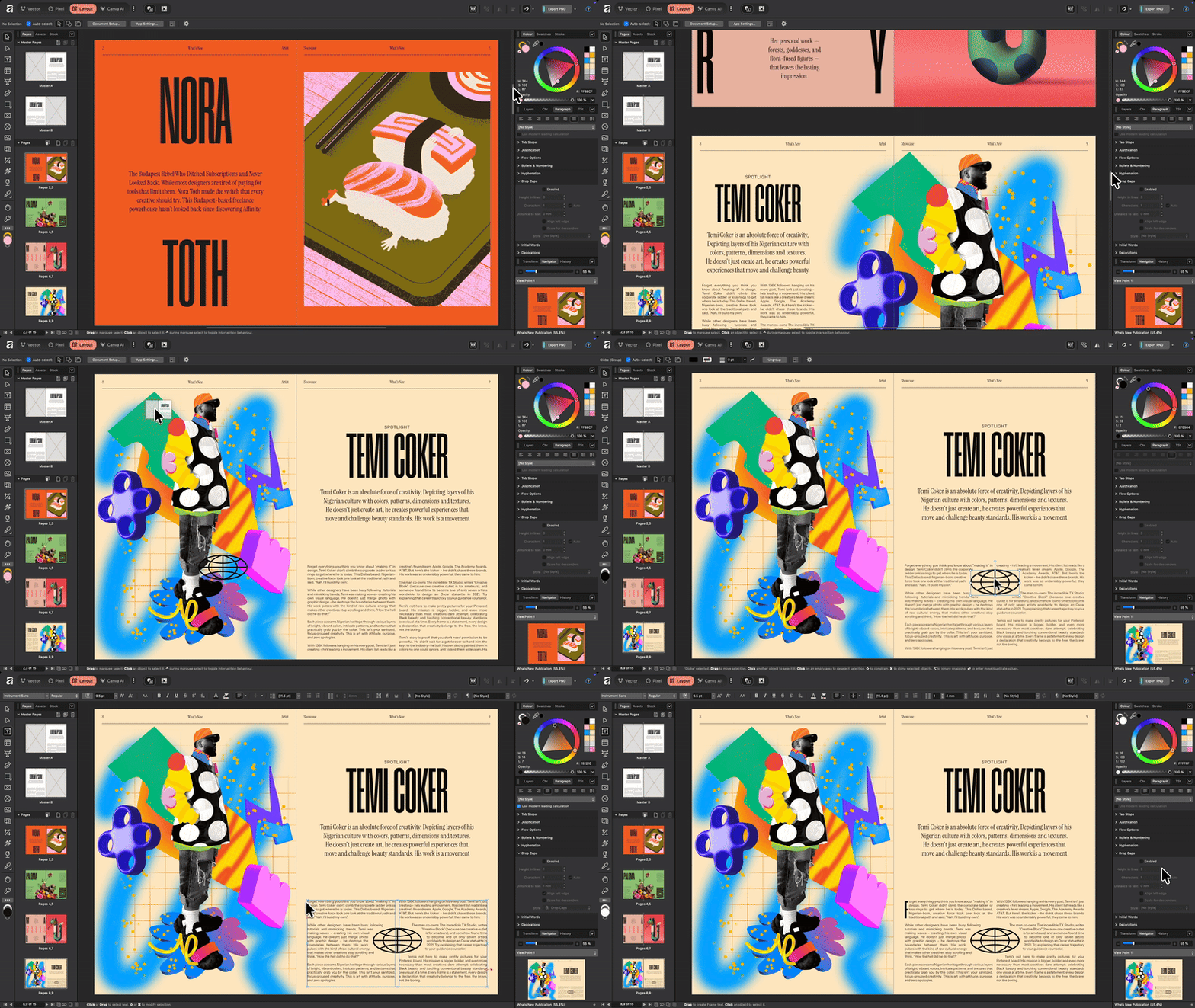
Affinity by Canva
It also doesn't help that Canva just made a major chess move by making the entire Affinity creative suite free for everyone. This means that the serious illustrators, graphic designers and photo editors have a great alternative to Adobe. While Figma has its own creative suite — Figma Draw, Figma Slides, & Figma Buzz; tools like Affinity are often going to be the go-to for graphic design folks.
Don't get me wrong, Figma is still the best tool for a majority of creatives and has a strong hold on our day-to-day workflow. Making any strong predictions at this point will be very ill-informed and its best to avoid making any conclusions as of now. 2026 however, will be a major year for companies to pivot and become a designer's best friend. If Figma can keep up and make a major impact, tables will turn again in their favor.
What's Your Reaction?
 Like
0
Like
0
 Dislike
0
Dislike
0
 Love
1
Love
1
 Funny
0
Funny
0
 Angry
0
Angry
0
 Sad
0
Sad
0
 Wow
0
Wow
0


